Materials & methods
Control Joints in Concrete: Why They Matter More Than You Think
Introduction
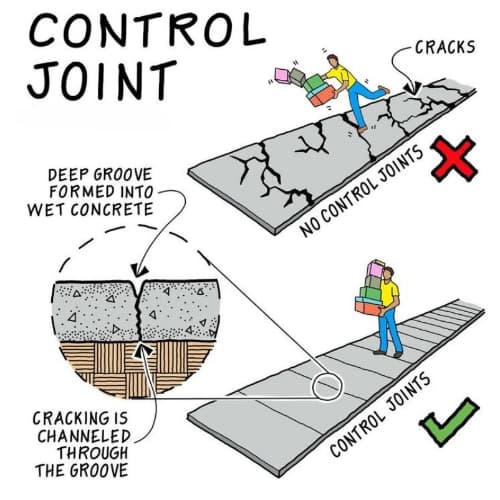
Concrete will crack. The only real question is where. If you have noticed straight lines cut into a concrete slab, they are not defects or afterthoughts. They are intentional features designed to control cracking and protect the long term performance of the slab.
Without properly planned control joints, large concrete slabs tend to crack randomly, affecting appearance, durability, and future maintenance costs.
Why Concrete Cracks
Concrete is a rigid material, but it is not static. It responds constantly to changes in temperature and moisture. As conditions change, internal stresses develop within the slab. If these stresses are not relieved in a controlled way, cracking becomes unavoidable.
Control joints exist to manage this natural behavior by guiding cracks to form in predictable, straight lines rather than spreading randomly across the surface.
Temperature Movement: Expansion and Contraction
Daily temperature changes cause concrete to expand when heated and contract as it cools. Over time, this movement creates internal tension within the slab.
Control joints act as planned weak points that allow the concrete to move safely. When cracking occurs, it follows these joints instead of appearing unpredictably, resulting in a cleaner appearance and improved long term performance.
Shrinkage During Curing
As fresh concrete sets and hardens, it undergoes natural shrinkage as moisture evaporates and strength develops. This early age shrinkage creates internal stress that can lead to surface cracking if not properly managed.
When control joints are placed at the correct depth and installed early, they provide a controlled path for this stress to release. Any cracking is confined to the joint locations, preserving both the appearance and serviceability of the slab.
The Bottom Line
Control joints are a small but essential part of quality concrete construction. They do not prevent cracking entirely, but they ensure it occurs in the right places.
Cracking is a natural behavior of concrete, not a construction failure. Proper planning and joint layout lead to cleaner finishes, longer lasting slabs, and fewer problems over time.