Architectural design
Smart Design Strategies to Control Solar Radiation

Introduction
Good design should work long before the air conditioning turns on. As temperatures rise and energy costs increase, controlling solar radiation has become a key factor in creating comfortable, efficient homes. With the right architectural strategies, it is possible to significantly reduce heat gain while improving both the appearance and performance of a home.
Landscaping: Nature’s First Line of Defense
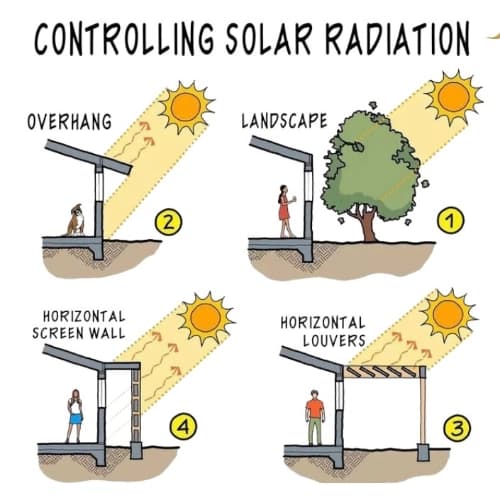
Well planned landscaping is one of the simplest and most effective ways to control solar heat. Strategically placed trees can shade windows, walls, and outdoor areas during the hottest parts of the day. Deciduous trees are especially effective, providing dense shade in warmer months while allowing sunlight through after shedding leaves in cooler seasons.
Beyond thermal comfort, mature trees improve air quality, enhance curb appeal, and increase property value. When positioned correctly, landscaping becomes a long term cooling strategy that works quietly and naturally.
Roof Overhangs: Passive Cooling That Works
Roof overhangs are a time tested passive design solution that continues to perform in modern homes. By extending the roof beyond exterior walls, overhangs block high angle summer sun from directly hitting windows and interior spaces. This reduces heat gain, glare, and reliance on mechanical cooling.
When designed correctly based on window orientation and sun angles, overhangs allow lower winter sunlight to enter the home. The result is year round comfort achieved through simple, thoughtful design rather than added energy use.
Horizontal Louvers: Controlled Light with Contemporary Style
Horizontal louvers offer precise control over sunlight while adding a modern architectural character to the building facade. They can be fixed or adjustable, allowing homeowners to manage light and heat throughout the day.
Louvers are particularly effective on west facing windows, where late afternoon sun is often the most intense. By filtering light rather than blocking it entirely, they reduce heat gain, maintain views, and enhance privacy without darkening interior spaces.
Screen Walls: Shade That Shapes Space
Screen walls provide both functional shading and strong visual impact. Constructed from materials such as wood, metal, or composite panels, they filter sunlight while helping define outdoor and semi outdoor spaces.
Unlike adjustable louvers, screen walls are fixed architectural elements that become part of the home’s identity. They reduce solar heat gain, improve privacy, and add depth and sophistication to the overall design.
The Bottom Line
Effective solar control is not about blocking sunlight completely. It is about managing it intelligently. When combined, these design strategies can significantly reduce cooling costs, protect interior finishes from UV exposure, and improve comfort throughout the year.
Good design does not fight the sun. It plans for it, allowing the home to work naturally with its environment while delivering long term comfort, efficiency, and visual appeal.