Structural & civil
Why Reinforced Concrete Remains a Cornerstone of Modern Construction
Introduction
Reinforced concrete is one of the most widely used building materials in the world—forming the backbone of bridges, highways, skyscrapers, residential structures, and countless infrastructure systems. Its success lies in its unique combination of two materials: concrete and steel reinforcement. Together, they form a strong, durable, and versatile composite material that can resist a variety of loads and environmental challenges. But why do these two materials work so well together? The answer lies in both science and practicality.
How Concrete and Reinforcement Work as One
Concrete is exceptional under compression—it can withstand high crushing forces with very little deformation. Steel reinforcement, on the other hand, excels under tension, the type of stress that pulls materials apart. When combined, reinforcement helps concrete resist tension, while concrete supports the steel under compression. Several key factors make this relationship highly effective:
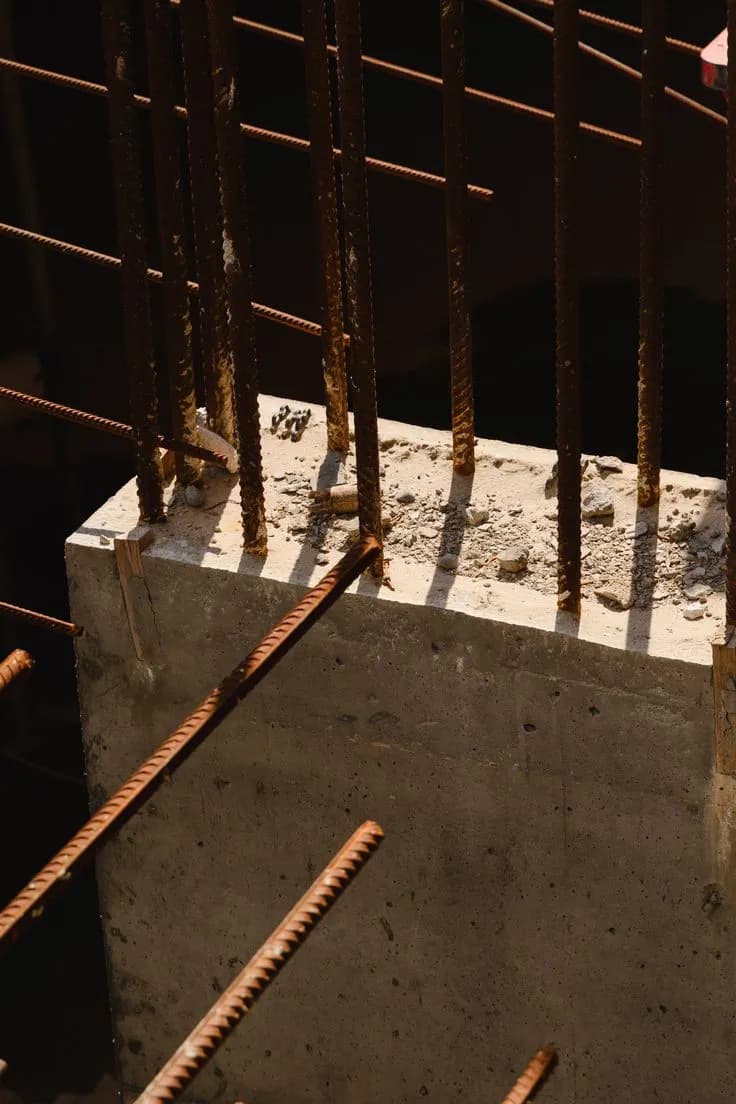
- Strong Mechanical Bonding: Steel reinforcement is designed with surface deformations—those ridges or ribs along the steel bar. These protrusions interlock with the surrounding concrete, allowing both materials to deform together as a single unit. This interlocking ability ensures that when a load is applied, the bond does not slip and the structure remains stable. Engineers call this deformation compatibility—a crucial aspect of reinforced concrete performance.
- Compatible Thermal Expansion: Buildings and infrastructure inevitably experience temperature changes. When materials expand or contract at different rates, cracks and separations can form. Fortunately, steel and concrete share nearly identical coefficients of thermal expansion (approximately 1.0 × 10⁻⁵ /°C). This means both materials expand and contract at the same pace, maintaining structural integrity even in fluctuating climates or fire exposure.
- Corrosion Protection: One of the major concerns of using steel in outdoor environments is rusting. However, when embedded in concrete, steel reinforcement is protected by concrete’s highly alkaline environment. This chemical protection prevents corrosion, significantly extending the lifespan of reinforced concrete structures. With proper cover thickness and good construction practices, reinforcement can last for decades—or even centuries.
Why Reinforced Concrete Is Preferred in Construction
Beyond its mechanical compatibility, reinforced concrete offers numerous practical advantages that make it a top choice for engineers and builders:
- Cost-Effective: Concrete is composed of readily available materials—cement, aggregates, and water. Since these ingredients can be sourced almost anywhere, reinforced concrete construction remains economical on a global scale.
- Weather & Fire Resistance: Concrete can resist harsh environmental conditions including heavy rain, high winds, and extreme heat. It does not burn and provides excellent fire protection for both the structure and its occupants.
- Versatile Shapes & Applications: Concrete is cast into molds, making it easy to form complex shapes, curved structures, or architectural elements that are difficult to achieve with steel alone.
- Ease of Construction: With well-established construction methods—formwork, reinforcing installation, and casting—reinforced concrete structures can be built efficiently without specialized fabrication facilities like those required for steel structures.
Reinforced concrete succeeds because it combines the best characteristics of its components: the compressive strength of concrete and the tensile strength of steel. With its durability, flexibility, affordability, and reliability, it continues to be a foundation of modern infrastructure—supporting the growth and development of societies around the world.