Structural & civil
Understanding Shallow Foundations: A Guide for Property Owners & Developers
Introduction
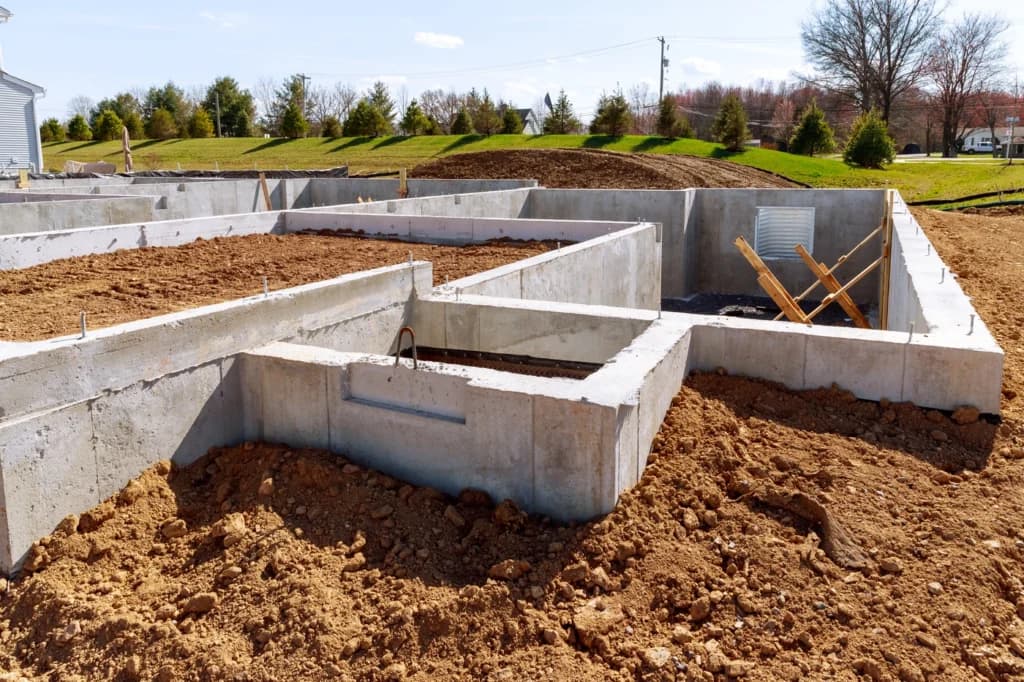
Every strong structure begins with a solid foundation. When designing buildings—especially small to medium-sized ones—engineers often choose shallow foundations. These foundations transfer loads from the structure into soil at a relatively shallow depth, making them cost-effective and less complex to construct than deep foundations like piles.
Below, we explore the primary types of shallow foundations and the key engineering considerations that ensure safety and long-term performance.
Types of Shallow Foundations
Shallow foundations come in several forms depending on soil strength, load conditions, and building type. The two most common are spread footings and mat (raft) foundations.
- Spread Footings: Spread footings—also known as isolated or strip footings—are the most common foundation type in construction today. They work by spreading the load of columns or walls across a wider soil area to prevent excessive settlement or failure. Because they are affordable and simple to build, they are widely used for homes, low-rise buildings, and structures built on moderate to strong soil conditions.
- Mat (Raft) Foundations: When soil conditions are weaker or more compressible, the building loads need to be distributed over a much larger area. In cases where the required spread footings would cover more than half of the building footprint, engineers recommend a mat foundation. A mat foundation is essentially one large, thick concrete slab that supports all or most of the structure.
Key Components of Shallow Foundation Design
To ensure a foundation performs well over the life of a structure, engineers evaluate four major aspects during design:
1. Vertical Bearing Capacity – Can the soil safely support the load?
2. Eccentricity Check – Is the load centered to avoid tipping or uneven stress?
3. Settlement – How much will the foundation move after construction?
4. Structural Design – Is the concrete footing itself strong enough?
Vertical Bearing Capacity
Soils can fail in different ways when overloaded. Engineers evaluate the footing to avoid these failure modes:
- General Shear Failure: A sudden and well-defined failure, typically occurring in firm soils.
- Local Shear Failure: A partial failure that occurs gradually, often in medium-dense soils.
- Punching Shear Failure: When a concentrated load causes a column to 'punch' directly through the footing slab.
Ensuring safety against these potential failures is essential to protect the structure and prevent catastrophic performance issues.
Eccentricity Check: Keeping Loads Balanced
In real conditions, loads are not always perfectly centered on the foundation. When this shift creates a lever arm (moment), engineers check eccentricity using:
e = M / Q, where M = moment and Q = axial load.
To ensure stability:
- Long-term loads → e ≤ 1/6 of footing width
- Short-term loads → e ≤ 1/3 of footing width
Keeping loads balanced prevents partial uplift and uneven soil pressure distribution.
Foundation Settlement
Some foundation movement is normal—what matters is keeping it within acceptable limits. Two primary types of settlement are evaluated:
- Immediate (Elastic) Settlement: Occurs during or immediately after construction due to the elastic deformation of the soil under load.
- Delayed (Consolidation) Settlement: Takes place gradually over time as the soil compresses and water drains from its pores, leading to densification.
Proper design helps minimize cracking, tilting, or long-term floor issues resulting from uneven or excessive settlement.